Homemade Pet Food: Achieving a Balanced Diet with 4 Key Nutrient Ratios for Optimal Health in 2026

As pet parents, we constantly strive to provide the best for our beloved companions. This often extends beyond affection and playtime to what we put in their food bowls. The increasing concern over commercial pet food ingredients, recalls, and the desire for more control over our pets’ nutrition has led many to explore the world of balanced homemade pet food. While the idea of preparing meals for your furry friend can be incredibly rewarding, it comes with a significant responsibility: ensuring that the diet is complete and nutritionally adequate. A homemade diet that lacks essential nutrients or has improper ratios can lead to serious health issues over time.
This comprehensive guide aims to demystify the process of creating truly balanced homemade pet food. We will delve into the four critical nutrient ratios that form the foundation of a healthy diet for both dogs and cats, ensuring your efforts contribute positively to their longevity and well-being. From understanding macronutrients like proteins, fats, and carbohydrates to micronutrients such as vitamins and minerals, we’ll equip you with the knowledge to formulate meals that meet your pet’s specific needs. Get ready to transform your kitchen into a pet-friendly culinary haven, confidently crafting meals that are both delicious and incredibly nutritious.
The Foundation: Why Balanced Homemade Pet Food Matters
The journey into homemade pet food often begins with a desire for transparency and control. Commercial pet foods, despite regulatory oversight, can sometimes contain fillers, artificial preservatives, colors, and ingredients that some pet owners prefer to avoid. By preparing meals at home, you know exactly what your pet is consuming, allowing you to select high-quality, fresh ingredients tailored to their individual health requirements, allergies, or sensitivities.
However, the common misconception is that simply feeding your pet cooked meat and vegetables constitutes a healthy diet. This couldn’t be further from the truth. Pets, like humans, require a precise balance of nutrients for optimal physiological function. A deficiency or excess of any single nutrient can have profound and lasting negative impacts on their health. This is why understanding the core principles of a balanced homemade pet food diet is paramount.
The Risks of Unbalanced Diets
Feeding an unbalanced homemade diet can lead to a myriad of health problems. For instance, a diet too low in calcium and too high in phosphorus can lead to bone demineralization and skeletal issues, especially in growing puppies and kittens. A lack of essential fatty acids can result in dull coats, skin problems, and compromised immune function. Deficiencies in vitamins, such as B vitamins or Vitamin D, can affect energy levels, nerve function, and overall vitality. Conversely, an excess of certain nutrients, like Vitamin A or D, can also be toxic.
Therefore, the goal is not just to provide food, but to provide nutrient-dense, species-appropriate, and precisely balanced meals. This requires careful attention to the ratios of macronutrients and the inclusion of all necessary micronutrients. Let’s dive into the core components that make up a truly balanced homemade pet food diet.
Key Nutrient Ratio 1: Protein – The Building Block of Life
Protein is arguably the most crucial macronutrient for both dogs and cats. It provides amino acids, which are the building blocks for muscles, skin, hair, enzymes, hormones, and antibodies. Without adequate protein, pets can experience muscle wasting, a weakened immune system, poor coat quality, and overall poor health.
Understanding Protein Requirements
For Dogs: Adult dogs typically require a diet with at least 18% crude protein on a dry matter basis. However, for active dogs, puppies, pregnant or lactating females, and senior dogs, this requirement can be significantly higher, often ranging from 25% to 35% of their caloric intake. High-quality animal proteins are preferred as they provide a complete amino acid profile. Excellent sources include lean meats (chicken, turkey, beef, lamb), fish (salmon, cod), and eggs. Some plant-based proteins like legumes can supplement but should not be the sole source due to their incomplete amino acid profiles for carnivores/omnivores.
For Cats: Cats are obligate carnivores, meaning their dietary needs are almost exclusively met through animal-based protein. They require a much higher protein intake than dogs, typically around 30-45% of their caloric intake, and sometimes even more depending on life stage. Cats also have specific amino acid requirements, such as taurine, which is found almost exclusively in animal tissues. A deficiency in taurine can lead to serious heart conditions (dilated cardiomyopathy) and vision problems. Therefore, for balanced homemade pet food for cats, lean meats, poultry, and fish should form the bulk of their diet.
Calculating Protein in Homemade Diets
When formulating homemade meals, aim for protein sources to constitute roughly 50-70% of the total meal volume (by weight before cooking) for dogs, and 70-85% for cats. This is a general guideline, and the actual percentage of protein will vary based on the specific cut of meat and its fat content. Always prioritize lean protein sources to control fat intake.
- Good Protein Sources: Chicken breast, turkey breast, lean ground beef, lamb, salmon, sardines, eggs, organ meats (liver, heart – in moderation).
- Considerations: Ensure variety to provide a broad spectrum of amino acids. Cook meats thoroughly to eliminate pathogens, but avoid overcooking, which can degrade some nutrients.
Key Nutrient Ratio 2: Fats – Essential Energy and Nutrient Absorption
Fats (lipids) are a concentrated source of energy, providing more than twice the calories per gram compared to proteins or carbohydrates. They are crucial for the absorption of fat-soluble vitamins (A, D, E, K), hormone production, cell membrane integrity, and maintaining healthy skin and a shiny coat. However, too much fat can lead to obesity, pancreatitis, and other health issues.
Understanding Fat Requirements
For Dogs: Adult dogs generally need a diet with 10-15% crude fat on a dry matter basis. Active dogs, puppies, and working dogs may require higher levels (up to 20%). It’s vital to include sources of essential fatty acids (EFAs), particularly Omega-3 and Omega-6. A good balance of these is crucial for anti-inflammatory processes and overall health.
For Cats: Cats also require fat for energy and essential fatty acids. Their fat requirements are typically around 15-20% of their caloric intake. Like dogs, they need Omega-3s and Omega-6s. Cats also have a unique requirement for arachidonic acid, an Omega-6 fatty acid found only in animal fats, which is why plant-based oils alone are insufficient for feline diets.
Incorporating Healthy Fats into Balanced Homemade Pet Food
When selecting fat sources, focus on quality. Avoid excessive saturated fats and trans fats. Instead, opt for healthy fats rich in EFAs.
- Good Fat Sources:
- Omega-3 Rich: Fish oil (salmon oil, cod liver oil), flaxseed oil (though dogs and cats convert ALA to EPA/DHA inefficiently, so animal sources are better).
- Omega-6 Rich: Small amounts of poultry fat, lean meat fats, sunflower oil (in moderation).
- Other Healthy Fats: Egg yolks, avocado (pulp only, without pit or skin due to persin toxicity), coconut oil (in very small amounts for specific benefits, not as a primary fat source).
- Calculating Fat: The amount of fat in meat can vary widely. When using lean meats, you may need to add a small amount of healthy oil. For example, a teaspoon of fish oil per pound of food can be a good starting point, but this needs to be tailored to your pet’s specific needs and the fat content of other ingredients.
- Ratio Consideration: The ideal Omega-6 to Omega-3 ratio for pets is generally between 5:1 and 10:1, with some experts advocating for an even narrower ratio (e.g., 2:1 to 5:1). This often requires supplementing with Omega-3 sources like fish oil.
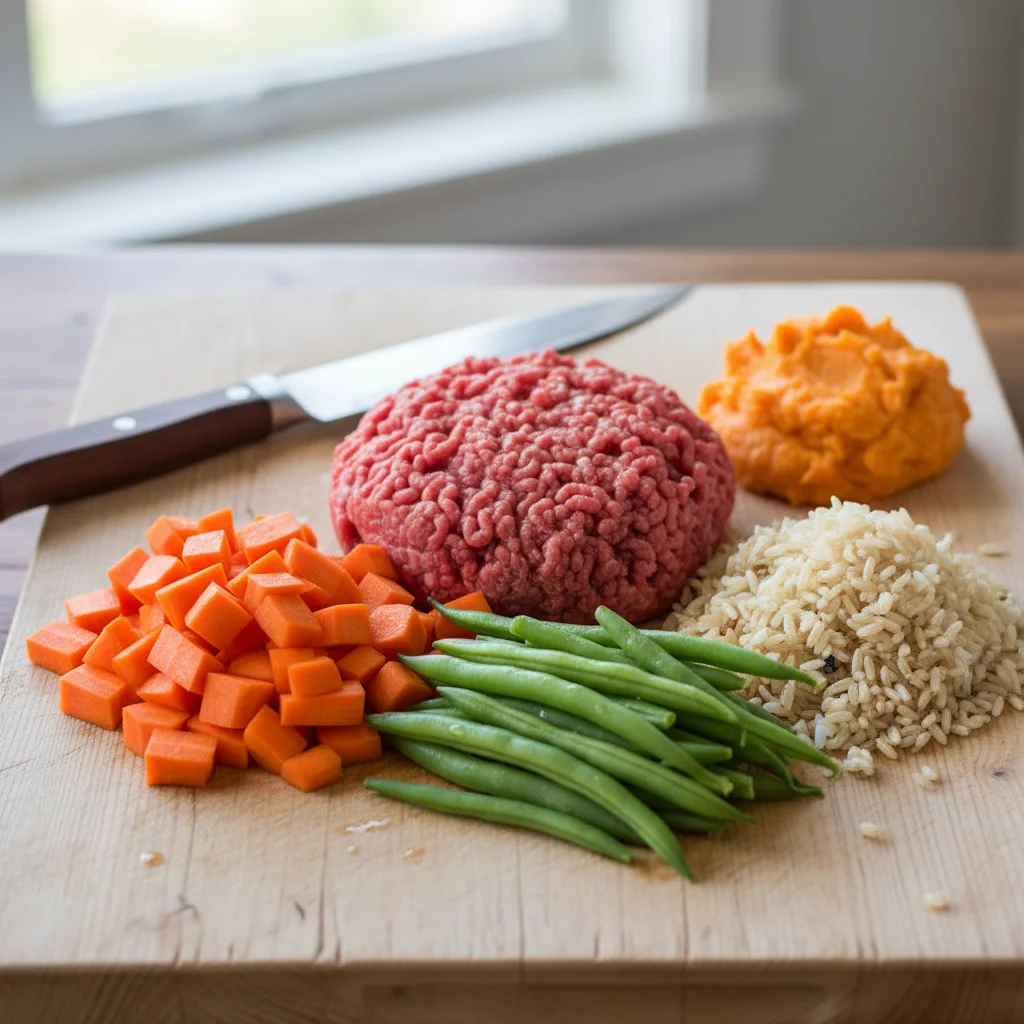
Key Nutrient Ratio 3: Carbohydrates – Energy and Fiber
Carbohydrates provide readily available energy and dietary fiber. While often debated in pet nutrition, particularly for cats, they play a role in providing glucose for energy, supporting gut health, and adding bulk to meals. The key is choosing the right type and amount of carbohydrates.
Understanding Carbohydrate Requirements
For Dogs: Dogs are omnivores and can digest and utilize carbohydrates efficiently. While there isn’t a strict minimum requirement, carbohydrates can form a significant portion of their diet (20-50% of caloric intake), especially for active dogs. Complex carbohydrates are preferred over simple sugars, as they provide sustained energy and fiber.
For Cats: As obligate carnivores, cats have a very limited need for carbohydrates. Their bodies are designed to derive energy primarily from protein and fat. While they can digest some carbohydrates, their digestive system is not as well-equipped as a dog’s. High carbohydrate diets can contribute to obesity and diabetes in felines. Therefore, for balanced homemade pet food for cats, carbohydrates should be minimal, typically less than 10% of their caloric intake, primarily from fibrous vegetables.
Incorporating Healthy Carbohydrates and Fiber
Focus on nutrient-dense, complex carbohydrates and fiber-rich vegetables.
- Good Carbohydrate Sources (for dogs, in moderation for cats):
- Complex Carbs: Cooked sweet potatoes, pumpkin, brown rice, quinoa, oats (gluten-free if sensitive).
- Fiber-Rich Vegetables: Green beans, peas, carrots, broccoli (steamed and pureed for better digestion), spinach, kale. These provide essential vitamins, minerals, and dietary fiber, which aids digestion and promotes satiety.
- Calculating Carbohydrates: For dogs, carbohydrates can make up about 20-30% of the total meal volume (by weight before cooking). For cats, this should be drastically reduced, perhaps 5-10% in the form of pureed vegetables.
- Preparation: Always cook grains and starchy vegetables thoroughly to make them digestible. Pureeing vegetables can also improve nutrient absorption.
Key Nutrient Ratio 4: Vitamins and Minerals – The Micronutrient Essentials
While macronutrients provide energy and building blocks, vitamins and minerals are the unsung heroes of a balanced homemade pet food diet. They act as co-factors for countless biochemical reactions, support immune function, bone health, nerve transmission, and virtually every bodily process. This is where homemade diets often fall short if not carefully planned.
Understanding Micronutrient Requirements
Pets require a wide array of vitamins (A, B-complex, C, D, E, K) and minerals (calcium, phosphorus, potassium, sodium, magnesium, iron, zinc, copper, manganese, selenium, iodine, etc.). The precise balance, especially of calcium and phosphorus, is critical.
Calcium and Phosphorus Ratio: This is arguably the most critical mineral ratio. The ideal Ca:P ratio for adult dogs and cats is generally between 1.1:1 and 1.4:1. For growing puppies and kittens, it might be slightly higher, but rarely exceeding 1.8:1. An imbalance can lead to severe skeletal problems.
Ensuring Complete Micronutrient Intake in Balanced Homemade Pet Food
Achieving a complete vitamin and mineral profile through whole foods alone can be challenging and often requires supplementation.
- Whole Food Sources:
- Calcium: Ground eggshells (a great source if you’re not feeding bones), bone meal (food-grade, human-grade), small amounts of plain yogurt or cottage cheese.
- Phosphorus: Abundant in meat, poultry, and fish.
- Other Minerals: Organ meats (liver, heart, kidney) are powerhouses of vitamins and minerals (iron, B vitamins, Vitamin A). Leafy greens, certain seeds (flax, chia – ground), and kelp powder can provide trace minerals.
- Vitamins: Vegetables (carrots for Vitamin A, leafy greens for Vitamin K), eggs (Vitamin D, B vitamins), fish (Vitamin D, B vitamins).
- The Role of Supplements: Even with a varied diet, it’s very difficult to meet all micronutrient needs without supplementation. A high-quality, veterinary-formulated vitamin and mineral supplement designed for homemade diets is often recommended. These supplements are specifically balanced to fill the gaps left by whole foods and ensure the correct Ca:P ratio and other essential nutrients.
- Consultation: This is where veterinary nutritionists or experienced veterinarians become invaluable. They can analyze your proposed recipes and recommend specific supplements and dosages tailored to your pet’s age, breed, health status, and the ingredients you use.
Putting It All Together: Crafting Your Pet’s Meal Plan
Now that we’ve covered the four key nutrient ratios, let’s look at how to practically apply this knowledge to create balanced homemade pet food.
General Guidelines for Recipe Formulation
- Start with a Base Protein: Choose a lean protein source (chicken, turkey, beef, lamb, fish) as the main component (50-70% for dogs, 70-85% for cats by weight).
- Add Healthy Fats: Ensure adequate fat from the protein source or by adding a small amount of healthy oil (e.g., fish oil) to meet EFA requirements.
- Incorporate Carbohydrates/Vegetables: For dogs, include cooked complex carbohydrates and a variety of vegetables (20-30% by weight). For cats, focus on a small amount of pureed, non-starchy vegetables (5-10%).
- Include Organ Meats: About 5-10% of the total food weight should come from organ meats (liver, heart, kidney) to boost vitamins and minerals. Liver should be limited to about 5% due to its high Vitamin A content.
- Add Calcium Source: If not feeding raw, ground bones (which is complex and risky if not done correctly), add a calcium supplement like finely ground eggshell powder or a balanced bone meal to achieve the correct Ca:P ratio.
- Supplement: Use a veterinary-approved vitamin and mineral supplement specifically designed for homemade pet diets. This is crucial for overall nutritional completeness.
- Water: Always ensure fresh water is available. You can also add some low-sodium broth to the food for hydration.
Example Meal Structure (Adjust Quantities Based on Pet’s Needs)
For Dogs (Adult, Medium Activity):
- Protein Source: 60% (e.g., cooked lean ground turkey or chicken breast)
- Complex Carbohydrate: 20% (e.g., cooked sweet potato or brown rice)
- Vegetables: 10% (e.g., steamed green beans, carrots, spinach)
- Organ Meat: 5% (e.g., cooked chicken liver)
- Fat/Oil: 1-2% (e.g., salmon oil)
- Calcium Source: 1-2% (e.g., ground eggshell powder)
- Vitamin/Mineral Supplement: As per product instructions
For Cats (Adult):
- Protein Source: 80% (e.g., cooked lean chicken thigh, beef, or salmon)
- Organ Meat: 10% (e.g., cooked chicken liver, heart)
- Vegetables (pureed): 5% (e.g., pureed pumpkin or green beans)
- Fat/Oil: 2-3% (e.g., fish oil, small amount of animal fat)
- Calcium Source: 1-2% (e.g., ground eggshell powder)
- Vitamin/Mineral Supplement: As per product instructions (ensure taurine is included or supplemented separately)
Important Considerations for Balanced Homemade Pet Food
- Consult Your Vet: Before making any significant dietary changes, especially to a homemade diet, consult with your veterinarian or a board-certified veterinary nutritionist. They can help you formulate recipes specific to your pet’s age, breed, activity level, and any underlying health conditions.
- Gradual Transition: Transition your pet to a new diet slowly over 7-10 days to avoid digestive upset.
- Food Safety: Practice strict food hygiene. Cook all meats thoroughly. Store homemade food in the refrigerator for no more than 3-4 days or freeze in individual portions.
- Variety: While consistency is good, offering a variety of protein sources and vegetables over time can provide a broader spectrum of nutrients.
- Monitoring: Observe your pet for any changes in weight, coat quality, energy levels, or stool consistency. These can be indicators of whether the diet is meeting their needs.

The Future of Pet Nutrition: Making Informed Choices in 2026
As we look towards 2026 and beyond, the trend towards personalized and transparent pet nutrition is only growing. The knowledge and tools available to pet owners are becoming more sophisticated, making the prospect of feeding a balanced homemade pet food diet more accessible than ever before. However, accessibility does not equate to simplicity. The commitment required to consistently provide nutritionally complete and balanced meals is significant.
The key takeaway is that while homemade diets offer unparalleled control and the potential for optimal health, they demand a thorough understanding of nutritional science. Simply mixing ingredients without regard for nutrient ratios and micronutrient completeness can inadvertently harm your pet. By focusing on the four critical nutrient ratios – protein, fat, carbohydrates, and the essential balance of vitamins and minerals – you are laying a solid foundation for your pet’s long-term health.
Embrace the journey of learning and collaboration with veterinary professionals. With careful planning, quality ingredients, and the right supplementation, you can confidently provide your cherished companion with a homemade diet that truly nourishes them from the inside out, contributing to a vibrant, healthy, and happy life for years to come. Your pet deserves nothing less than the best, and with this knowledge, you are well-equipped to deliver it.