Aggressive Behavior Training: 5 Emerging Methods for 2026
In the dynamic world of animal behavior and training, the quest for more effective, humane, and sustainable methods to address challenging behaviors, particularly aggression, is ceaseless. For decades, positive reinforcement has been lauded as the gold standard, a cornerstone of ethical and successful animal training. Its principles, rooted in rewarding desired behaviors to increase their likelihood, have transformed our understanding of animal learning and our relationships with our beloved companions.
However, as we fast-forward to 2026, the landscape of animal behavior science continues to evolve at an unprecedented pace. New research, technological advancements, and a deeper understanding of animal cognition and emotion are paving the way for innovative approaches. This raises a crucial question: Is Positive Reinforcement Still King in 2026? An Analysis of 5 Emerging Training Methods for Aggressive Behaviors seeks to answer this by exploring the forefront of animal aggression management.
Aggression in animals is a complex issue, often stemming from a myriad of factors including fear, anxiety, pain, territoriality, resource guarding, and even genetic predispositions. It is not a simple ‘bad’ behavior but a communication strategy, albeit one that can be dangerous and distressing for both the animal and its human counterparts. Effective aggressive behavior training requires a nuanced understanding of its root causes and a commitment to humane intervention.
This article will delve into five emerging methods that are gaining traction and showing promise in the realm of aggressive behavior training. We will compare them against the established efficacy and ethical considerations of positive reinforcement, evaluating their potential to enhance, complement, or even revolutionize current practices. Our goal is to provide a comprehensive and forward-looking analysis for animal professionals, researchers, and dedicated pet owners alike, ensuring that the welfare and safety of animals remain at the core of all training endeavors.
Positive Reinforcement: The Enduring Foundation of Aggressive Behavior Training
Before we explore the new frontiers, it’s imperative to revisit the bedrock of modern animal training: positive reinforcement. This method involves adding something desirable to the environment (a treat, praise, a toy) immediately after a desired behavior occurs, thereby increasing the likelihood of that behavior being repeated. In the context of aggressive behavior training, positive reinforcement is used to teach alternative, incompatible behaviors, or to change an animal’s emotional response to triggers.
How Positive Reinforcement Works for Aggression:
- Counter-Conditioning: Changing an animal’s negative emotional response to a stimulus (e.g., another dog, a stranger) into a positive one. For example, if a dog growls at other dogs, positive reinforcement might involve giving a high-value treat every time another dog appears at a safe distance, associating the presence of other dogs with something good.
- Desensitization: Gradually exposing an animal to a feared stimulus at a low intensity, slowly increasing the intensity as the animal remains calm, while pairing it with positive reinforcement.
- Training Alternative Behaviors: Teaching an animal to perform a behavior that is incompatible with aggression, such as sitting or looking at the owner instead of lunging or barking.
The benefits of positive reinforcement are well-documented: it builds trust between the animal and trainer, reduces stress and fear in the animal, and promotes a willingness to learn. It focuses on what we want the animal to do, rather than punishing what we don’t. This approach is not only ethical but also highly effective in creating lasting behavioral change. However, even with its proven track record, challenges can arise, particularly with deeply ingrained or severe aggressive behaviors, where progress can be slow, requiring immense patience and consistency.
5 Emerging Training Methods for Aggressive Behaviors in 2026
As our understanding of animal behavior deepens and technology advances, several new and refined approaches are emerging in the field of aggressive behavior training. These methods often build upon or integrate with the principles of positive reinforcement, offering innovative tools and perspectives.
1. Applied Ethology and Ecological Behavior Modification
This approach moves beyond simply modifying individual behaviors to understanding the animal’s natural behavioral repertoire and its environment. Applied Ethology focuses on the species-specific needs and evolutionary drivers behind aggressive displays. Ecological Behavior Modification then seeks to alter the animal’s environment and daily routine to prevent aggression triggers and provide appropriate outlets for natural behaviors.
- Core Principle: Address the root cause by understanding the animal’s natural instincts and ensuring its environment meets those needs.
- How it Helps Aggression: If a dog exhibits territorial aggression, this method might involve re-evaluating its living space, ensuring adequate mental and physical stimulation, and managing access to perceived resources. For a cat displaying inter-cat aggression, it could mean optimizing vertical space, providing multiple resources (litter boxes, food bowls), and enriching the environment to reduce competition.
- Comparison to Positive Reinforcement: While positive reinforcement is used to teach new behaviors within this framework, the primary focus is on proactive environmental management and fulfilling species-typical needs to prevent aggression from occurring in the first place. It complements positive reinforcement by reducing the frequency and intensity of aggressive encounters, making training more effective.
- Potential: High, especially for preventing aggression and creating long-term, sustainable solutions by addressing underlying welfare issues.
2. Neuro-Linguistic Programming (NLP) for Animals (Adapted)
While NLP originated in human psychology, its core principles – understanding patterns of thought, emotion, and behavior – are being adapted for animal training. This isn’t about animals understanding human language, but about trainers learning to better ‘read’ and respond to animal communication (body language, vocalizations) and to structure training in ways that align with the animal’s internal processing. It focuses on identifying and shifting internal states that lead to aggression.
- Core Principle: Optimize communication between trainer and animal by understanding the animal’s sensory perception and internal representations of the world.
- How it Helps Aggression: A trainer might observe specific subtle body language cues that precede an aggressive outburst (e.g., slight tension in the jaw, a shift in gaze). By identifying these ‘pre-aggression’ signals, the trainer can intervene with positive reinforcement or redirection *before* the aggression escalates, effectively changing the animal’s internal state from anxious/fearful to calm/responsive. It also involves trainers consciously managing their own emotional state and communication to avoid inadvertently triggering aggression.
- Comparison to Positive Reinforcement: NLP for animals acts as a sophisticated diagnostic and communication tool that enhances the application of positive reinforcement. It helps trainers time their rewards more precisely and understand the animal’s readiness for learning, making positive reinforcement interventions more impactful.
- Potential: Significant for trainers seeking a deeper level of connection and understanding with animals, leading to more precise and effective interventions.
3. Biofeedback and Wearable Technology Integration
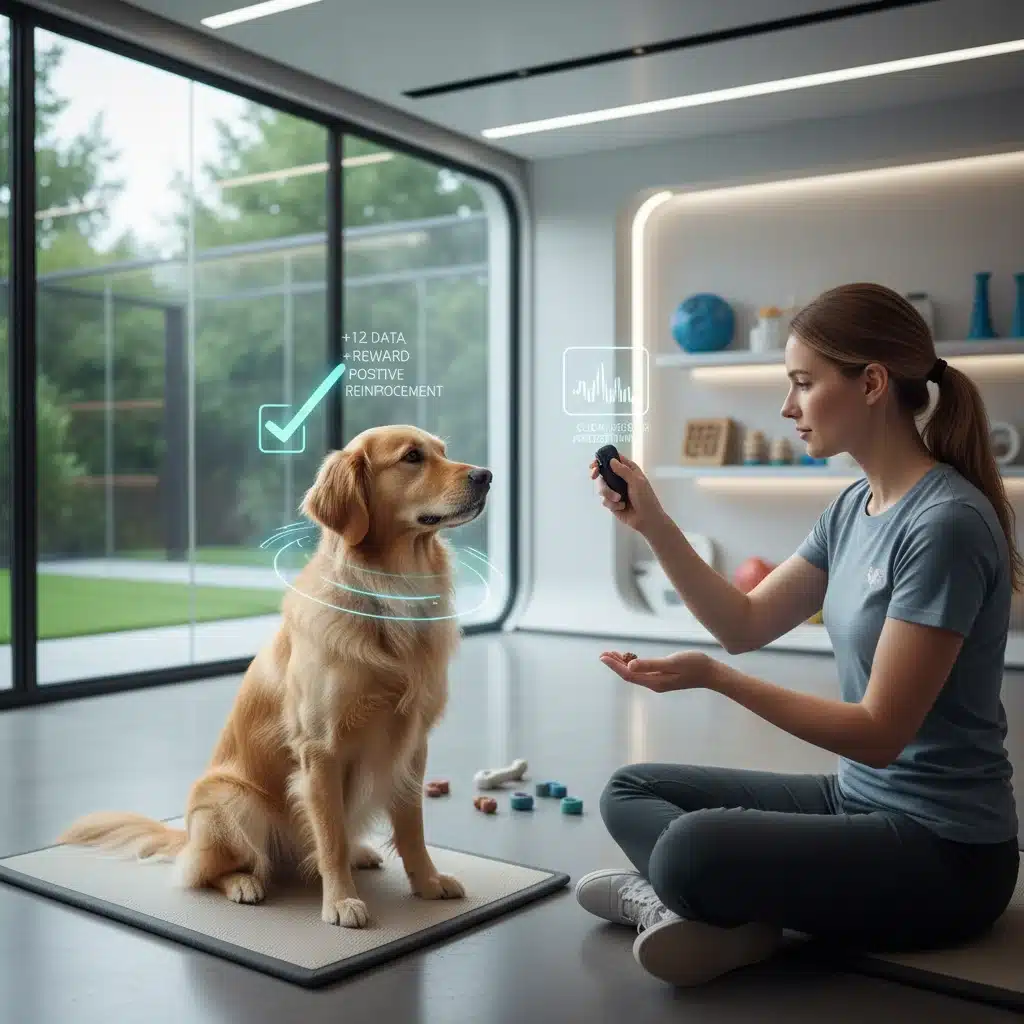
The advent of wearable technology for pets is revolutionizing how we monitor and understand their physiological states. Biofeedback involves providing an animal with real-time information about its own physiological processes (e.g., heart rate, skin temperature, cortisol levels) often through subtle sensory cues, to help them learn to self-regulate. When combined with positive reinforcement, this can be a powerful tool for managing anxiety and fear-based aggression.
- Core Principle: Empower animals to gain conscious control over involuntary physiological responses linked to stress and aggression.
- How it Helps Aggression: Imagine a dog wearing a collar that monitors its heart rate. As its heart rate begins to rise in response to a trigger, a subtle vibration or a specific scent is released from the collar. The trainer then immediately offers a positive reinforcer (e.g., a treat, praise) if the dog’s heart rate begins to decrease. Over time, the dog learns to associate calming itself down with positive outcomes, effectively managing its own stress response before it escalates to aggression. This is particularly useful for anxiety-driven aggressive behavior training.
- Comparison to Positive Reinforcement: Biofeedback provides an objective, real-time measure of an animal’s internal state, allowing positive reinforcement to be applied with unprecedented precision. It makes the internal, often invisible, process of emotional regulation tangible and trainable.
- Potential: High for severe anxiety and fear-based aggression, offering a direct pathway to teach emotional self-regulation.
4. Cognitive Bias Modification (CBM) for Animals
Borrowed from human psychology, CBM aims to change an animal’s underlying cognitive biases, particularly those related to threat perception. Animals prone to aggression often exhibit an ‘attention bias’ towards threat-related stimuli or an ‘interpretation bias’ where ambiguous stimuli are interpreted negatively. CBM seeks to retrain these biases.
- Core Principle: Alter an animal’s automatic thought processes and interpretations of stimuli from negative/threatening to positive/neutral.
- How it Helps Aggression: This might involve specialized computer-based training games or specific physical exercises. For example, a dog prone to fear aggression towards strangers might be repeatedly presented with images of ambiguous human faces (neither clearly threatening nor friendly) and consistently rewarded only when it ‘chooses’ (e.g., by touching with its nose) the more neutral or friendly interpretation. Over time, this repetitive training aims to shift the dog’s automatic interpretation bias away from threat. This is a very targeted form of aggressive behavior training.
- Comparison to Positive Reinforcement: CBM uses positive reinforcement as its mechanism for learning. However, its unique contribution lies in its focus on the cognitive underpinnings of aggression, rather than just the outward behavior. It aims to change the internal ‘lens’ through which the animal perceives its world.
- Potential: Promising for animals with chronic anxiety or fear-based aggression, offering a deeper cognitive intervention.
5. Integrated Multi-Modal Therapy (IMMT)
Rather than a single method, IMMT is an overarching philosophy that advocates for the simultaneous and integrated use of multiple evidence-based approaches. This includes positive reinforcement, environmental modification, nutritional adjustments, pharmacological interventions (when necessary and prescribed by a vet), and even specific forms of enrichment or physical therapy. It recognizes that aggression is rarely caused by a single factor and thus requires a holistic solution.
- Core Principle: A personalized, comprehensive treatment plan that combines the best elements of various disciplines to address all contributing factors to aggression.
- How it Helps Aggression: For a dog exhibiting complex aggression, an IMMT plan might involve: daily positive reinforcement training sessions for alternative behaviors; a tailored diet to support brain health; medication to reduce baseline anxiety; specific environmental enrichment to reduce frustration; and regular veterinary check-ups to rule out pain. All these elements are coordinated and adjusted based on the animal’s response. This is a highly individualized approach to aggressive behavior training.
- Comparison to Positive Reinforcement: IMMT doesn’t replace positive reinforcement; it elevates it by creating an optimal context for positive reinforcement to be most effective. It acknowledges that sometimes, underlying physiological or environmental issues must be addressed before an animal can truly engage in and benefit from behavioral training.
- Potential: Extremely high for complex and severe cases of aggression, offering the most comprehensive and tailored solutions.
Comparing the Emerging Methods with Positive Reinforcement
While these emerging methods offer exciting new avenues, it’s crucial to understand their relationship with the established practice of positive reinforcement. None of these methods advocate for the abandonment of positive reinforcement; rather, they often serve to enhance, refine, or complement it.
| Method | Primary Focus | Relationship to Positive Reinforcement | Best Suited For |
|---|---|---|---|
| Positive Reinforcement | Rewarding desired behaviors to increase frequency. | Foundation. | All forms of behavior modification, including aggression. |
| Applied Ethology & Ecological Behavior Modification | Environmental and species-specific needs. | Complements by preventing triggers and creating optimal learning environments. | Prevention, addressing underlying welfare issues, complex aggression. |
| Neuro-Linguistic Programming (Animals) | Trainer-animal communication, understanding internal states. | Enhances precision and timing of positive reinforcement. | Subtle aggression cues, improving trainer efficacy, building trust. |
| Biofeedback & Wearable Tech | Physiological self-regulation, real-time monitoring. | Provides objective data for precise positive reinforcement, directly trains emotional regulation. | Anxiety-driven aggression, fear-based responses. |
| Cognitive Bias Modification (CBM) | Shifting negative cognitive biases. | Uses positive reinforcement as the learning mechanism to change internal thought patterns. | Chronic fear/anxiety-based aggression, re-framing perception. |
| Integrated Multi-Modal Therapy (IMMT) | Holistic, personalized combination of therapies. | Positive reinforcement is a key component within a broader, coordinated treatment plan. | Severe, complex, or multi-faceted aggression cases. |
The Ethical Considerations and Challenges
As with any advancements in animal training, ethical considerations are paramount. The core principle of ‘Do No Harm’ must guide the implementation of all these methods. While positive reinforcement is inherently humane, the emerging techniques require careful scrutiny:
- Ethical Application: Ensuring that techniques like biofeedback or CBM are applied in a way that does not cause stress or discomfort to the animal.
- Scientific Validation: Many of these methods are still in their nascent stages regarding animal application. Rigorous scientific research is crucial to validate their efficacy and long-term impact on animal welfare.
- Accessibility and Cost: Advanced technologies and specialized therapies might not be accessible or affordable for all pet owners, potentially creating disparities in care.
- Trainer Expertise: These sophisticated methods require highly skilled and knowledgeable trainers to implement correctly. Misapplication could be detrimental.
The challenge lies in integrating these new tools thoughtfully, always prioritizing the animal’s well-being and ensuring that the methods are evidence-based and ethically sound. The goal of aggressive behavior training should always be to reduce stress and improve the quality of life for the animal, not merely to suppress unwanted behaviors.
Future Outlook: Is Positive Reinforcement Still King?
Based on our analysis of these five emerging methods, the resounding answer is: Yes, positive reinforcement is still king, but its reign is evolving.
Positive reinforcement remains the foundational, most humane, and broadly applicable method for teaching animals and modifying behavior. It fosters a positive relationship, builds confidence, and encourages voluntary cooperation. The emerging methods discussed here are not replacements for positive reinforcement; rather, they are sophisticated tools and frameworks that augment its power and expand its reach.
- Enhancement: Methods like NLP for animals and Biofeedback can make the application of positive reinforcement more precise and effective by giving trainers deeper insights into an animal’s internal state.
- Contextualization: Applied Ethology and Ecological Behavior Modification provide the essential context, ensuring that an animal’s fundamental needs are met, thereby reducing the triggers for aggression and creating an environment where positive reinforcement can thrive.
- Deepening Impact: CBM offers a way to address the cognitive roots of aggression, working in tandem with positive reinforcement to reshape an animal’s perception of the world.
- Integration: IMMT demonstrates the power of combining multiple approaches, with positive reinforcement as a central pillar, to tackle the most challenging cases of aggression comprehensively.
In 2026, the most effective aggressive behavior training will likely involve a synergistic approach, where trainers skillfully weave together the ethical principles of positive reinforcement with insights from applied ethology, the precision of technology-assisted learning, and a deep understanding of animal cognition and emotion. The future of training is not about abandoning what works, but about building upon it with intelligence, compassion, and innovation.
Conclusion
The journey to understand and manage animal aggression is ongoing. While positive reinforcement has firmly established its place as the ethical and effective cornerstone of training, the year 2026 brings forth exciting innovations. Emerging methods such as Applied Ethology and Ecological Behavior Modification, Neuro-Linguistic Programming for Animals, Biofeedback and Wearable Technology Integration, Cognitive Bias Modification, and Integrated Multi-Modal Therapy are not usurping positive reinforcement’s throne. Instead, they are becoming powerful allies, offering nuanced approaches and technological advancements that enable trainers to apply positive reinforcement with greater precision, address deeper underlying causes, and achieve more profound and lasting behavioral changes.
For anyone involved in animal care and training, staying abreast of these developments is crucial. The ultimate goal remains the same: to foster harmonious relationships between humans and animals, ensuring their welfare, safety, and happiness through intelligent, humane, and effective aggressive behavior training strategies. The king, positive reinforcement, endures, now supported by a sophisticated court of innovative techniques, ready to face the challenges of animal behavior in the years to come.