Advanced Clicker Training: Shaping Complex Animal Behaviors in 2026

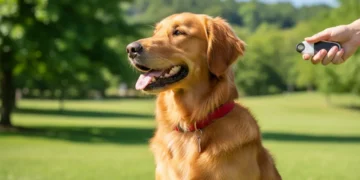
In the dynamic world of animal behavior and training, methods constantly evolve, driven by deeper understanding and innovative applications. As we step into 2026, advanced clicker training continues to stand out as a cornerstone of positive reinforcement, offering unparalleled precision and effectiveness. While the basics of clicker training – marking a desired behavior with a ‘click’ and following it with a reward – remain foundational, the true power lies in its advanced applications. This article delves into the cutting-edge of advanced clicker training, exploring three sophisticated techniques designed to shape complex behaviors in a variety of animals, from household pets to working animals.
The journey from teaching a dog to sit to guiding it through a multi-step service task or enabling a cat to perform intricate tricks requires more than just basic conditioning. It demands a nuanced approach, an understanding of behavioral chains, and the strategic use of reinforcement schedules. The year 2026 has brought with it refined perspectives on how to leverage the clicker for truly remarkable outcomes, pushing the boundaries of what animals can learn and how efficiently they can learn it. This isn’t just about teaching new tricks; it’s about fostering deeper communication, enhancing cognitive function, and building a stronger, more positive relationship between animal and trainer.
Before we dive into the specific advanced applications, it’s crucial to acknowledge the underlying principles that make advanced clicker training so effective. At its heart, clicker training is about operant conditioning, where behaviors are learned through their consequences. The click acts as a ‘bridge’ or a ‘marker signal,’ precisely identifying the exact moment the animal performs the desired action. This precision is what sets it apart, allowing for the shaping of behaviors that would be nearly impossible to communicate through other means. The reward that follows the click reinforces the behavior, increasing the likelihood of its repetition.
The evolution of clicker training has seen a shift from simple, discrete behaviors to complex sequences and problem-solving tasks. This progression is fueled by an increasing body of research in animal cognition and learning theory, which continually informs and refines our training methodologies. Trainers are now equipped with a richer toolkit, enabling them to tackle challenges that once seemed insurmountable, from rehabilitating animals with behavioral issues to preparing them for highly specialized roles. The emphasis remains on voluntary participation and positive motivation, ensuring that the learning process is enjoyable and stress-free for the animal.
The Foundation of Advanced Clicker Training: Beyond the Basics
To truly grasp advanced clicker training, one must first ensure a solid understanding of its basic tenets. This includes perfect timing of the click, effective use of high-value rewards, and the concept of ‘charging the clicker’ (associating the click with something good). Once these fundamentals are mastered, trainers can begin to explore more sophisticated techniques. The key difference between basic and advanced clicker training lies in the complexity of the behaviors being taught and the strategies employed to achieve them. It moves from teaching individual actions to chaining multiple actions, generalizing behaviors across different contexts, and even fading prompts to encourage independent thought and action.
One of the initial steps in progressing to advanced techniques is understanding the concept of ‘shaping.’ Shaping involves reinforcing successive approximations of a desired behavior. Instead of waiting for the perfect final behavior, the trainer rewards small steps in the right direction. For instance, if you want a dog to close a door, you might first click and reward for looking at the door, then for moving towards it, then for touching it with its nose, then for pushing it slightly, and so on, until the door is fully closed. This gradual process builds confidence and clarity for the animal, making complex behaviors attainable.
Another critical aspect is the understanding of reinforcement schedules. While continuous reinforcement is excellent for teaching new behaviors, intermittent reinforcement (rewarding only some instances of the behavior) is crucial for maintaining behaviors and making them more resistant to extinction. Advanced clicker training often involves strategic shifts between these schedules to optimize learning and retention. Furthermore, the concept of ‘stimulus control’ – ensuring the behavior occurs only in response to a specific cue – becomes paramount in advanced applications, allowing for precise control over complex sequences.
The role of environmental management also becomes more pronounced in advanced clicker training. By carefully controlling the training environment, trainers can minimize distractions and set the animal up for success, gradually introducing more challenging environments as the behavior becomes more robust. This proactive approach prevents frustration and reinforces the positive association with learning. It’s about creating a conducive learning space where the animal feels safe, motivated, and understood.
Application 1: Behavioral Chains and Sequencing for Service Animals
One of the most impactful applications of advanced clicker training in 2026 is in developing complex behavioral chains for service animals. A behavioral chain is a sequence of individual behaviors linked together, where the completion of one behavior acts as a cue for the next. For example, a service dog might need to open a refrigerator, retrieve a specific item, and bring it to its handler. This seemingly simple task is, in fact, a series of distinct behaviors that must be performed in a precise order.
The process begins by teaching each individual component behavior using standard clicker training. Once each behavior is solid and under stimulus control (i.e., the dog performs it reliably on cue), the trainer starts to link them. The key here is that the completion of the preceding behavior becomes the cue for the next. For instance, once the dog opens the refrigerator door, the sight of the open door becomes the cue to reach for the item. The click and reward are initially given after each successful link in the chain, and eventually, only after the completion of the entire chain. This method ensures that the animal understands the entire sequence and performs it fluidly.
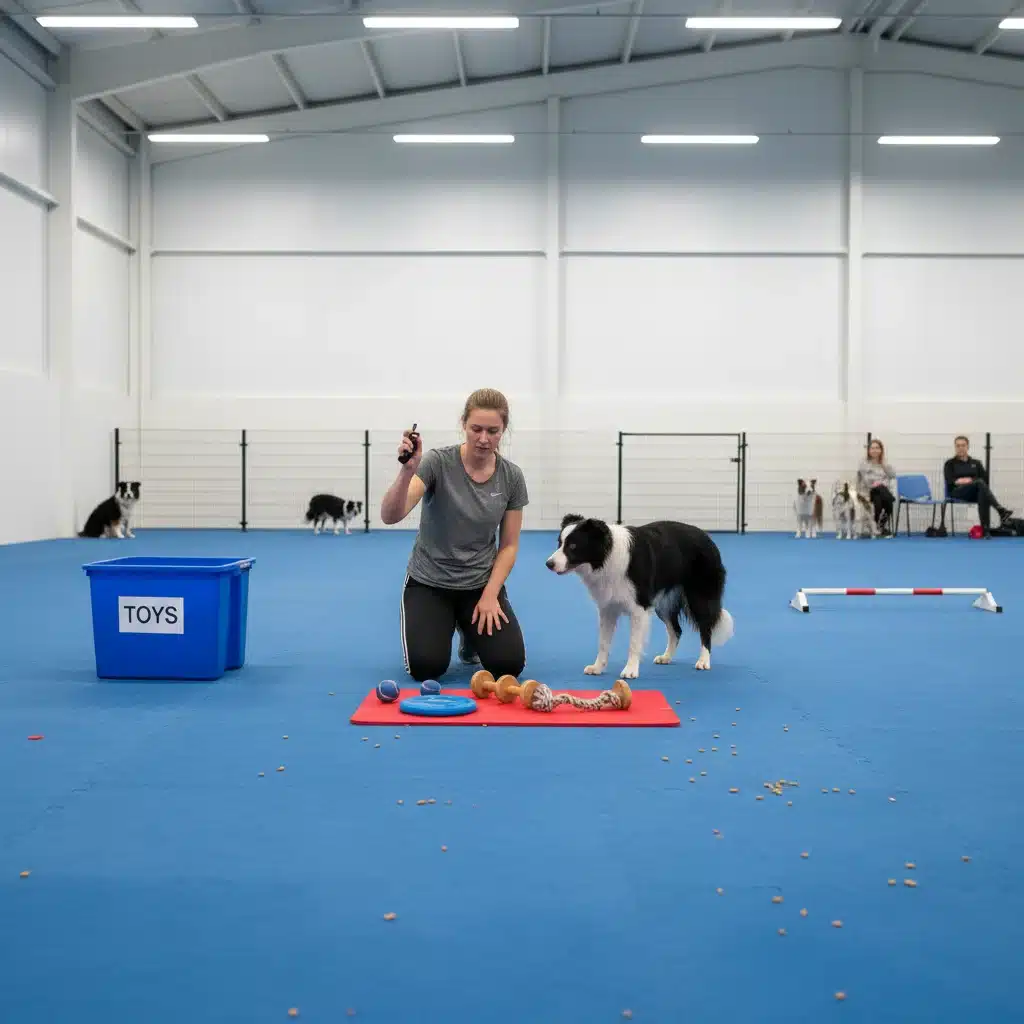
This application requires meticulous planning and a deep understanding of the animal’s learning style. Trainers often use ‘backward chaining,’ where the last behavior in the sequence is taught first, then the second to last, and so on. This approach ensures that the animal always ends with a successful and reinforced behavior, which can be highly motivating. For example, if the goal is to put toys in a bin, the dog might first be taught to drop a toy into the bin when standing right next to it. Then, it’s taught to pick up a toy and walk to the bin, and finally, to find a toy, pick it up, walk to the bin, and drop it in.
The benefits of using advanced clicker training for behavioral chains are immense. It promotes independent thought, as the animal learns to respond to environmental cues rather than constant human prompting. It also builds incredible reliability, which is crucial for service animals whose actions can have life-changing implications for their handlers. Furthermore, the positive reinforcement nature of clicker training minimizes stress and maximizes the animal’s willingness to engage in these complex tasks, fostering a strong partnership built on trust and mutual understanding. This method is not limited to service animals; it can be applied to any animal needing to learn a multi-step process, such as agility courses for dogs or complex routines for performing animals.
Application 2: Shaping Abstract Concepts and Problem-Solving
Beyond concrete actions, advanced clicker training in 2026 is increasingly being utilized to teach animals abstract concepts and enhance their problem-solving abilities. This is a significant leap from traditional training, which often focuses on rote memorization of commands. Teaching abstract concepts involves helping an animal understand ideas like ‘same’ or ‘different,’ ‘big’ or ‘small,’ or even ‘left’ or ‘right,’ without relying on physical cues. This opens up new avenues for cognitive enrichment and mental stimulation.
One common technique for teaching abstract concepts is ‘concept discrimination.’ For example, to teach a dog the concept of ‘same,’ a trainer might present two identical objects and one different object. The dog is clicked and rewarded for choosing the identical pair. Over time, with variations in objects, sizes, and colors, the dog learns to generalize the concept of ‘same’ regardless of the specific items. This requires careful setup, systematic presentation, and precise clicking for correct choices, reinforcing the animal’s understanding of the abstract idea rather than just a specific object.
Problem-solving, too, benefits immensely from advanced clicker training. Instead of directly teaching a solution, the trainer can use clicker training to reinforce attempts at problem-solving, encouraging the animal to experiment and figure things out on its own. For instance, with puzzle feeders, an animal might initially be clicked for simply interacting with the feeder. As it explores different mechanisms, any action that brings it closer to success (e.g., batting a lever, nudging a door) is clicked and rewarded. This fosters a ‘growth mindset’ in the animal, where it learns that trying new things and experimenting can lead to positive outcomes.
This approach is particularly valuable for animals in zoos or research settings, where cognitive enrichment is paramount. By teaching animals to solve novel problems, we not only keep them mentally stimulated but also gain insights into their cognitive capabilities. For pet owners, teaching problem-solving can manifest in teaching dogs to open crates, find hidden objects, or even perform simple household tasks that require a degree of independent thought. The clicker provides the immediate feedback needed for the animal to understand which of its experimental actions are leading it closer to the desired outcome.
This approach is particularly valuable for animals in zoos or research settings, where cognitive enrichment is paramount. By teaching animals to solve novel problems, we not only keep them mentally stimulated but also gain insights into their cognitive capabilities. For pet owners, teaching problem-solving can manifest in teaching dogs to open crates, find hidden objects, or even perform simple household tasks that require a degree of independent thought. The clicker provides the immediate feedback needed for the animal to understand which of its experimental actions are leading it closer to the desired outcome.
The success of teaching abstract concepts and problem-solving through advanced clicker training hinges on the trainer’s ability to break down complex ideas into manageable components and to design scenarios that encourage exploration and discovery. It’s less about direct instruction and more about guiding the animal towards independent learning. This not only makes the animal smarter but also more adaptable and resilient, capable of tackling new challenges with confidence.
Application 3: Modifying Complex Behavioral Issues and Phobias
Perhaps one of the most profound and challenging applications of advanced clicker training is in modifying complex behavioral issues and addressing phobias. Unlike teaching new behaviors, this involves changing deeply ingrained or fear-driven responses. Traditional methods often rely on suppression or punishment, which can exacerbate fear and damage the animal-handler relationship. Advanced clicker training offers a humane and highly effective alternative through systematic desensitization and counter-conditioning.
Consider an animal with severe separation anxiety. Instead of simply ignoring the behavior or punishing destructive actions, advanced clicker training focuses on systematically desensitizing the animal to departure cues and counter-conditioning positive associations with being alone. This might involve clicking and rewarding for calm behavior when the owner merely picks up keys, then for walking towards the door, then for opening the door, then for stepping outside for a second, gradually increasing the duration. The click and reward signal to the animal that these previously fear-inducing cues now predict something good (the reward), thereby changing its emotional response.
For phobias, such as fear of loud noises (e.g., thunderstorms, fireworks), the approach is similar. The trainer would identify the trigger (e.g., the sound of thunder) and introduce it at a very low intensity, below the animal’s fear threshold. As soon as the animal shows any relaxed or non-fearful response to this faint sound, it is clicked and rewarded. Gradually, the intensity of the sound is increased, always ensuring the animal remains below its fear threshold. This process, known as ‘graduated exposure,’ combined with positive reinforcement, helps the animal build a new, positive association with the feared stimulus.
The success of this application relies heavily on the trainer’s ability to read the animal’s body language and recognize subtle signs of stress or relaxation. Pushing an animal beyond its comfort zone too quickly can set back progress. Therefore, patience, consistency, and a keen observational eye are paramount. The clicker’s precision is invaluable here, as it allows the trainer to mark the exact moment of calm or brave behavior, reinforcing it powerfully.

Furthermore, advanced clicker training can be used to teach ‘alternative behaviors’ that are incompatible with the problem behavior. For instance, if a dog jumps on guests, it can be clicked and rewarded for sitting politely when someone approaches. By reinforcing the desired alternative, the jumping behavior naturally diminishes. This proactive and positive approach not only resolves the issue but also strengthens the animal’s trust and confidence, leading to a happier, better-adjusted companion.
The year 2026 emphasizes a holistic approach to behavioral modification, integrating advanced clicker training with environmental adjustments, veterinary consultation when necessary, and a deep commitment to the animal’s well-being. This ensures that behavioral challenges are addressed comprehensively, leading to lasting positive change.
The Future of Advanced Clicker Training: What’s Next?
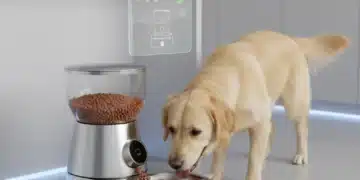
As we look beyond 2026, the field of advanced clicker training is poised for even more exciting developments. Integration with technology, such as automated reward dispensers triggered by specific behaviors or remote training systems, could further enhance precision and consistency. Research into animal cognition continues to uncover more about how animals learn, perceive the world, and solve problems, which will undoubtedly lead to even more sophisticated training protocols.
There’s a growing emphasis on understanding individual differences in learning styles across species and even within species. Tailoring advanced clicker training programs to an animal’s specific personality, breed characteristics, and past experiences will become increasingly important. This personalized approach promises to unlock even greater potential in our animal companions, allowing for highly individualized and effective training journeys.
Moreover, the ethical considerations of animal training are continuously refined. The positive, force-free nature of clicker training aligns perfectly with contemporary animal welfare standards, and its advanced applications will continue to champion humane and respectful interactions. The focus will remain on building a cooperative relationship, where animals are willing participants in their learning, not coerced subjects.
The expansion of advanced clicker training into new species and contexts is also a promising area. While traditionally associated with dogs, its principles are universally applicable to any sentient being capable of learning from consequences. From exotic birds to marine mammals, the precision and positive reinforcement of clicker training offer a powerful tool for husbandry, enrichment, and communication.
Conclusion: Empowering Animals Through Advanced Learning
The 2026 update on advanced clicker training highlights its enduring power and adaptability in shaping complex animal behaviors. From constructing intricate behavioral chains for service animals to fostering abstract thought and effectively modifying challenging behavioral issues, the clicker remains an indispensable tool for trainers committed to positive reinforcement. These advanced applications underscore the depth of animal intelligence and the incredible potential that can be unlocked through precise, humane, and thoughtful training methodologies.
Embracing advanced clicker training is about more than just teaching commands; it’s about fostering a deeper connection with animals, empowering them to navigate our world with confidence, and providing them with mental and emotional enrichment. As we continue to refine our understanding of animal learning, the techniques discussed here will undoubtedly evolve, paving the way for even more remarkable achievements in the years to come. For anyone looking to elevate their animal training skills, exploring these advanced clicker training methods offers a rewarding path to unparalleled success and a stronger bond with their animal companions.
The journey into advanced clicker training is a continuous learning process for both the animal and the trainer. It demands patience, creativity, and a willingness to adapt. However, the rewards – a well-behaved, confident, and happy animal – are immeasurable. By staying informed about the latest advancements and consistently applying these sophisticated techniques, trainers can achieve truly extraordinary results, transforming the lives of animals and their human counterparts alike. The future of animal training is bright, and advanced clicker training is at its forefront, guiding us towards a more harmonious coexistence with the animal kingdom.