Advanced Dog Training: Mastering Complex Commands by Mid-2026
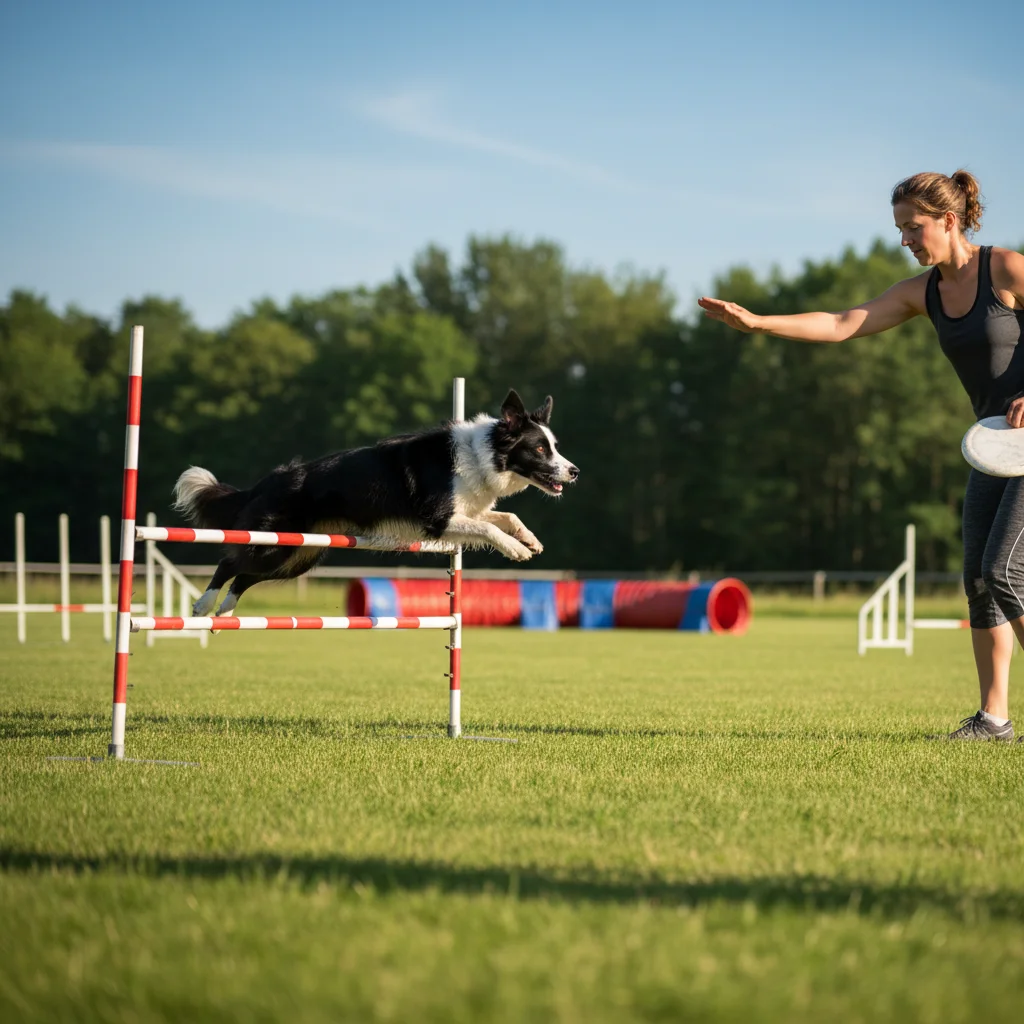
In the vast and rewarding world of dog ownership, the journey often begins with basic obedience: sit, stay, come, and heel. These foundational commands are crucial for safety and building a respectful relationship with your canine companion. However, for many dog owners, the desire to deepen this bond and unlock their dog’s full potential leads them to the realm of advanced dog training. This isn’t just about showing off impressive tricks; it’s about enhancing communication, providing mental stimulation, and fostering a level of trust and understanding that transcends the ordinary.
By mid-2026, imagine your dog not only responding flawlessly to every command but anticipating your needs, performing intricate tasks, and showcasing an intelligence that continually amazes. This article is your comprehensive guide to achieving just that, focusing on three complex commands that will elevate your dog’s obedience and your training prowess. We’ll delve into the ‘Send Out’ command, the ‘Object Discrimination and Retrieve’ command, and the ‘Emergency Down from a Distance’ command. These aren’t simple feats; they require dedication, patience, and a nuanced understanding of canine psychology. But with the right approach, any dog, regardless of breed or age, can achieve remarkable levels of obedience.
The benefits of engaging in advanced dog training extend far beyond mere compliance. A well-trained dog is a happier dog. They are more confident, less anxious, and more integrated into the family unit. Advanced training provides an outlet for their natural instincts, whether it’s problem-solving, scent work, or physical agility. For you, the owner, it’s an opportunity to develop an unparalleled connection with your pet, built on mutual respect and clear communication. Moreover, a dog proficient in advanced commands can be a valuable asset in various situations, from assisting with daily tasks to participating in dog sports or even therapy work.
Setting a target like mid-2026 gives us a clear goal and ample time to systematically work through each command. This isn’t a race, but a structured progression. We’ll break down each command into manageable steps, discuss common challenges, and offer proven strategies to overcome them. Before we dive into the specifics, let’s establish some fundamental principles that underpin all successful advanced dog training.
Foundational Principles of Advanced Dog Training
Before embarking on the journey of mastering complex commands, it’s imperative that your dog has a solid grasp of basic obedience. Commands like ‘sit’, ‘stay’, ‘come’, ‘down’, and ‘heel’ must be second nature, executed reliably in various environments and with increasing distractions. Without this strong foundation, attempting advanced maneuvers will likely lead to frustration for both you and your dog.
Patience and Consistency: The Cornerstones of Success
Advanced dog training is not a sprint; it’s a marathon. There will be days of rapid progress and days where it feels like you’re taking two steps back. Patience is paramount. Avoid becoming frustrated, as your dog will pick up on your emotions, making training less effective and enjoyable. Consistency, both in your commands and your expectations, is equally vital. Ensure everyone in the household uses the same cues and rewards, reinforcing the desired behaviors uniformly.
Positive Reinforcement: Motivation Through Reward
The most effective and humane approach to advanced dog training is positive reinforcement. This involves rewarding desired behaviors with something your dog values – treats, praise, toys, or a favorite activity. Positive reinforcement builds a strong, trusting relationship and makes learning a positive experience. Avoid punishment-based methods, which can lead to fear, anxiety, and a breakdown in communication.
Breaking Down Commands: Small Steps to Big Achievements
Complex commands can seem daunting, but the secret lies in breaking them down into the smallest possible steps. Each tiny success should be rewarded, gradually building towards the complete behavior. This technique, known as ‘shaping,’ allows your dog to understand what is being asked of them without becoming overwhelmed.
Proofing and Generalization: Training in Real-World Scenarios
A command isn’t truly mastered until your dog can perform it reliably in any environment, with any level of distraction. This process is called ‘proofing’ and ‘generalization.’ Start training in a quiet, familiar environment, then gradually introduce distractions and new locations. This ensures your dog understands the command, not just the context in which it was initially taught.
Session Length and Frequency: Keeping it Fun
Keep training sessions short, frequent, and fun. Dogs have relatively short attention spans, especially when learning new things. Aim for 5-10 minute sessions several times a day rather than one long, arduous session. End on a positive note, even if it means asking your dog to perform an easy, known command they can succeed at.
Command 1: The ‘Send Out’ Command
The ‘Send Out’ command instructs your dog to run a specific distance away from you and then stop or perform another action, such as going to a designated ‘place’ or retrieving an object. This command is incredibly useful for off-leash control, dog sports like obedience and agility, and even in everyday situations where you need your dog to move away from a specific area or person.
Why ‘Send Out’ is an Advanced Command
This command requires a high degree of trust and understanding. Your dog must be confident moving away from your immediate presence, often without direct physical guidance. It demands excellent recall, a solid ‘stay’ or ‘down’ from a distance, and the ability to follow directional cues.
Breaking Down the ‘Send Out’ Command
-
Step 1: Building a Strong ‘Go’ Cue and Destination
Start by teaching your dog to go to a specific target. This could be a mat, a cone, or a designated spot. Lure them to the spot with a treat, say your ‘go’ cue (e.g., ‘Go Place’, ‘Out’), and reward them generously when they reach it. Repeat this many times, gradually fading the lure until they go to the spot on cue. Initially, the spot should be very close to you.
-
Step 2: Increasing Distance and Duration
Once your dog reliably goes to the target when it’s close, begin to increase the distance. Take one step back, give the ‘go’ cue, and reward. Slowly increase the distance over many sessions. Simultaneously, work on duration – asking them to stay at the target for increasingly longer periods before being released.
-
Step 3: Introducing Directional Cues (Optional but Recommended)
For more advanced ‘send outs,’ you might want to teach directional cues (left, right, straight). Start with very clear hand signals, guiding your dog. For example, point to the left, say ‘left,’ and reward heavily when they move in that direction. This can be integrated with sending them to a target in a specific direction.
-
Step 4: Adding Distractions and Proofing
Once your dog can reliably ‘send out’ to a target at a reasonable distance in a quiet environment, it’s time to add distractions. Start small: a toy on the ground, a person walking by in the distance. Gradually increase the level of distraction. Practice in different locations – your backyard, a park, an open field.
-
Step 5: Combining with Other Commands
The ultimate goal for the ‘send out’ is often to combine it with another command. For instance, ‘Out and Down’ (send out, then down at the target) or ‘Out and Retrieve’ (send out, then retrieve an object from the target). Introduce these combinations slowly, ensuring each component is solid before linking them.
Command 2: Object Discrimination and Retrieve
This command, often referred to as ‘Retrieve Specific Article’ or ‘Find It,’ involves teaching your dog to identify and retrieve a particular object from a group of similar or dissimilar items. This is a fantastic mental exercise for dogs, leveraging their incredible sense of smell and their capacity for learning object names. It’s incredibly useful for service dogs, but also a fun party trick and a great way to engage your dog’s mind.
Why Object Discrimination is an Advanced Command
This command requires your dog to understand and remember the names of multiple objects, differentiate between them, and then perform a retrieve. It challenges their cognitive abilities, memory, and scent discrimination skills.
Breaking Down the ‘Object Discrimination and Retrieve’ Command
-
Step 1: Teaching Object Names Individually
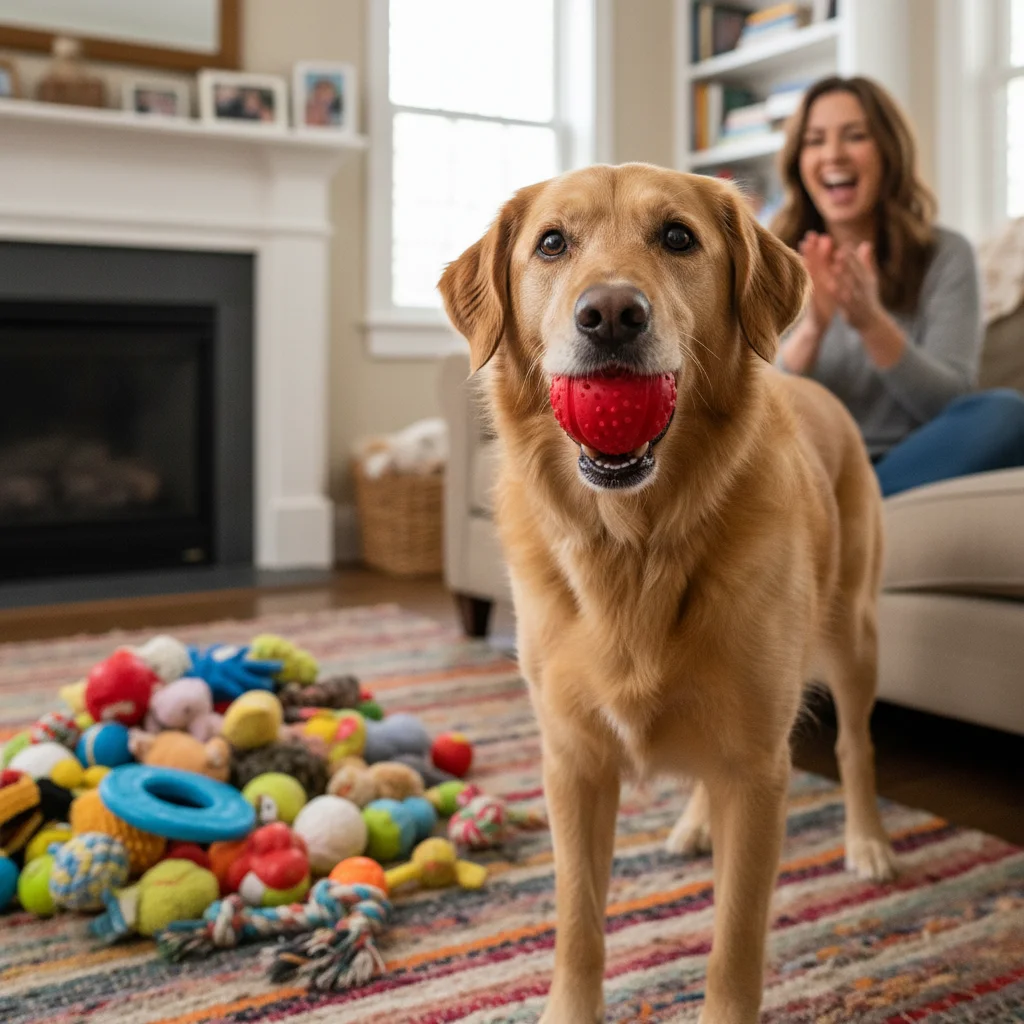
Start with two distinct objects, say a ‘ball’ and a ‘rope.’ Hold up the ball, say ‘ball,’ and immediately reward your dog for looking at it or touching it. Repeat this many times. Do the same for the rope. The goal is for your dog to associate the sound of the word with the object. Do not ask them to retrieve yet.
-
Step 2: Introducing the Retrieve for Named Objects
Once your dog seems to understand the individual names, place one object (e.g., the ball) on the ground a short distance away. Say ‘Get ball!’ and encourage them to retrieve it. Reward heavily when they bring it back. Repeat with the rope. Only work with one object at a time at this stage.
-
Step 3: Discrimination – Two Objects
Now, place both the ‘ball’ and the ‘rope’ on the ground, a little distance apart. Ask your dog to ‘Get ball!’ If they go for the rope, gently redirect them to the ball without scolding. Reward only when they retrieve the correct item. Repeat until they are consistently choosing the correct object. Then switch and ask for the ‘rope.’
-
Step 4: Increasing the Number of Objects and Distractions
Gradually increase the number of objects your dog can discriminate between. Add a new item, teach its name individually, then introduce it into the discrimination game. As your dog becomes proficient, increase the similarity between the objects (e.g., different types of balls, different colored ropes). Practice in various locations with different levels of distraction.
-
Step 5: Generalization and Real-World Application
Once your dog has mastered several object names, try hiding the objects and asking them to ‘Find [object name]!’ This adds another layer of complexity and utilizes their scenting abilities. This command can be incredibly useful for finding lost keys, retrieving specific toys, or even helping with chores.
Command 3: Emergency Down from a Distance
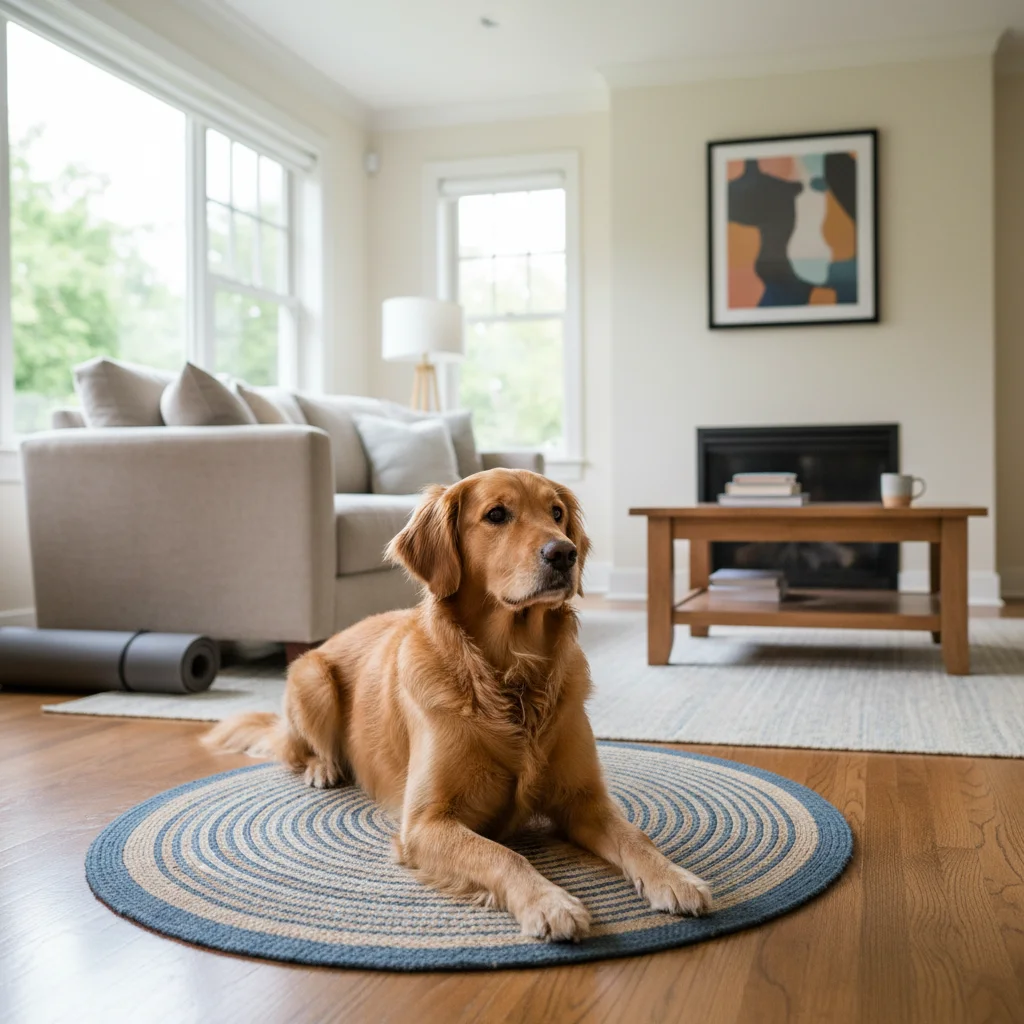
The ‘Emergency Down from a Distance’ command is arguably one of the most critical advanced dog training commands for safety. It teaches your dog to immediately drop into a down position, no matter the distance or distraction, upon hearing a specific cue. This command can literally save your dog’s life, preventing them from running into traffic, approaching a dangerous animal, or getting into any hazardous situation.
Why Emergency Down is an Advanced Command
This command requires absolute reliability and an instantaneous response. It overrides all other instincts or distractions and demands a ‘default’ reaction from your dog. The stakes are high, so the training must be thorough and proofed extensively.
Breaking Down the ‘Emergency Down from a Distance’ Command
-
Step 1: Rock-Solid Basic ‘Down’
Ensure your dog has a perfect ‘down’ command right next to you. They should drop immediately and stay until released, regardless of moderate distractions. Practice this hundreds of times in various indoor and outdoor settings.
-
Step 2: Introducing the Emergency Cue and High-Value Rewards
Choose a unique, sharp, and distinct verbal cue for your emergency down (e.g., ‘FREEZE!’, ‘STOP!’, ‘DOWN!’). This cue should be reserved exclusively for this command. When teaching it, use your absolute highest-value treats (e.g., chicken, cheese, hot dogs). Give your regular ‘down’ cue, and as your dog goes down, immediately say your emergency cue and flood them with treats and praise. The goal is to create an extremely positive association with the emergency cue.
-
Step 3: Increasing Distance with the Emergency Cue
Once your dog associates the emergency cue with the down position, start taking small steps away. Give the emergency cue, and as your dog drops, quickly move to them to deliver the high-value reward. Gradually increase the distance, always ensuring you can get to them quickly to reward. If they don’t drop, go back a step.
-
Step 4: Adding Movement and Distractions
Practice the emergency down while your dog is in motion (walking, trotting, running). Start in a low-distraction environment. As they run, give the emergency cue. The moment their rear hits the ground, run to them with rewards. Introduce mild distractions, then gradually increase them. This might include other people, dogs at a distance, toys, or even food on the ground. The key is to make the reward for the emergency down more enticing than any distraction.
-
Step 5: Proofing and Generalization in High-Stakes Scenarios
This is where the real work comes in. Practice in environments where you might actually need the command – near a road (on a long line for safety!), around other dogs (initially with a helper), or in busy public places. Always use a long line or a secure area for safety during proofing. The goal is for the emergency down to be an automatic, non-negotiable response, regardless of what else is happening. Practice regularly to maintain its reliability.
Common Challenges and Troubleshooting in Advanced Training
Even with the best intentions and methods, advanced dog training presents its own set of hurdles. Recognizing these common challenges and having strategies to overcome them is crucial for sustained progress.
Lack of Motivation or Engagement
If your dog seems uninterested, it could be due to several factors. Are your rewards high-value enough? Some dogs are highly food motivated, others prefer toys or a quick game of tug. Experiment to find what truly excites your dog. Also, ensure training sessions are short and fun, ending before your dog gets bored or tired. Vary your training locations and activities to keep things fresh and engaging.
Inconsistency in Performance
One day your dog performs perfectly, the next they seem to have forgotten everything. Inconsistency often stems from insufficient proofing. You might have only practiced in one environment or with limited distractions. Go back to basics in a controlled environment, then gradually reintroduce distractions and new locations. Ensure everyone who interacts with your dog uses the same commands and expectations.
Frustration and Stress (for Dog and Owner)
Training should be a positive experience. If either you or your dog are getting frustrated, take a break. Push too hard, and you risk creating negative associations with training. Simplify the task, reduce distractions, or revert to an easier command where your dog can succeed. Celebrate small victories, and remember that progress isn’t always linear.
Overcoming Plateaus
It’s common to hit a plateau where progress seems to halt. When this happens, re-evaluate your approach. Are you breaking down the command into small enough steps? Is your timing of rewards precise? Sometimes, taking a short break from a particular command and working on something else can help. When you return, both you and your dog might have a fresh perspective. Consider consulting with a professional trainer for an objective viewpoint and new strategies.
Setting Your Dog Up for Success by Mid-2026
Achieving mastery of these complex commands by mid-2026 requires a structured plan and unwavering commitment. Here’s how to maximize your chances of success:
Create a Training Schedule
Consistency is key. Dedicate specific, short periods each day (e.g., three 5-minute sessions) to work on these commands. A routine helps both you and your dog stay on track.
Document Your Progress
Keep a training journal. Note down what you worked on, how your dog performed, what rewards were most effective, and any challenges encountered. This helps you track progress, identify patterns, and adjust your strategy as needed.
Seek Professional Guidance
Don’t hesitate to enroll in an advanced obedience class or work with a certified professional dog trainer. An experienced trainer can offer personalized advice, identify subtle issues, and provide valuable feedback that can accelerate your progress. They can also introduce you to new techniques and help proof commands in challenging environments.
Join a Training Community
Connect with other dog owners who are interested in advanced dog training. Online forums, local clubs, or training groups can provide support, encouragement, and new ideas. Learning from others’ experiences and celebrating successes together can be incredibly motivating.
Prioritize Your Dog’s Well-being
Ensure your dog is healthy, well-fed, and gets adequate exercise and mental stimulation outside of training sessions. A dog that is physically and mentally satisfied is far more receptive to learning. Avoid training when your dog is stressed, unwell, or overly tired.
Celebrate Every Milestone
Every step forward, no matter how small, is a victory. Celebrate your dog’s successes with enthusiasm. This positive reinforcement not only motivates your dog but also reinforces your own commitment and makes the entire journey more enjoyable.
Beyond Mid-2026: The Lifelong Journey of Learning
Mastering these three complex commands by mid-2026 is an ambitious yet achievable goal. However, the journey of advanced dog training doesn’t end there. Dogs, like humans, thrive on continuous learning and mental engagement. Once these commands are solid, you can explore other advanced skills: scent work, competitive obedience, agility, trick training, or even specialized tasks for assistance work.
The true reward of advanced dog training isn’t just a dog that performs impressive feats; it’s the deeper connection, mutual respect, and profound understanding that develops between you and your canine companion. It’s about building a partnership where communication flows effortlessly, and your dog looks to you not just as an owner, but as a trusted leader and friend. The skills you gain in patience, observation, and positive reinforcement will serve you well in all aspects of your life with your dog.
So, take a deep breath, commit to the process, and embark on this incredible journey. By mid-2026, you and your dog will not only have mastered these complex commands but will have forged an unbreakable bond built on shared accomplishments and endless possibilities. Happy training!